
Automated parking · lift and shuttle
Shuttle Parking System
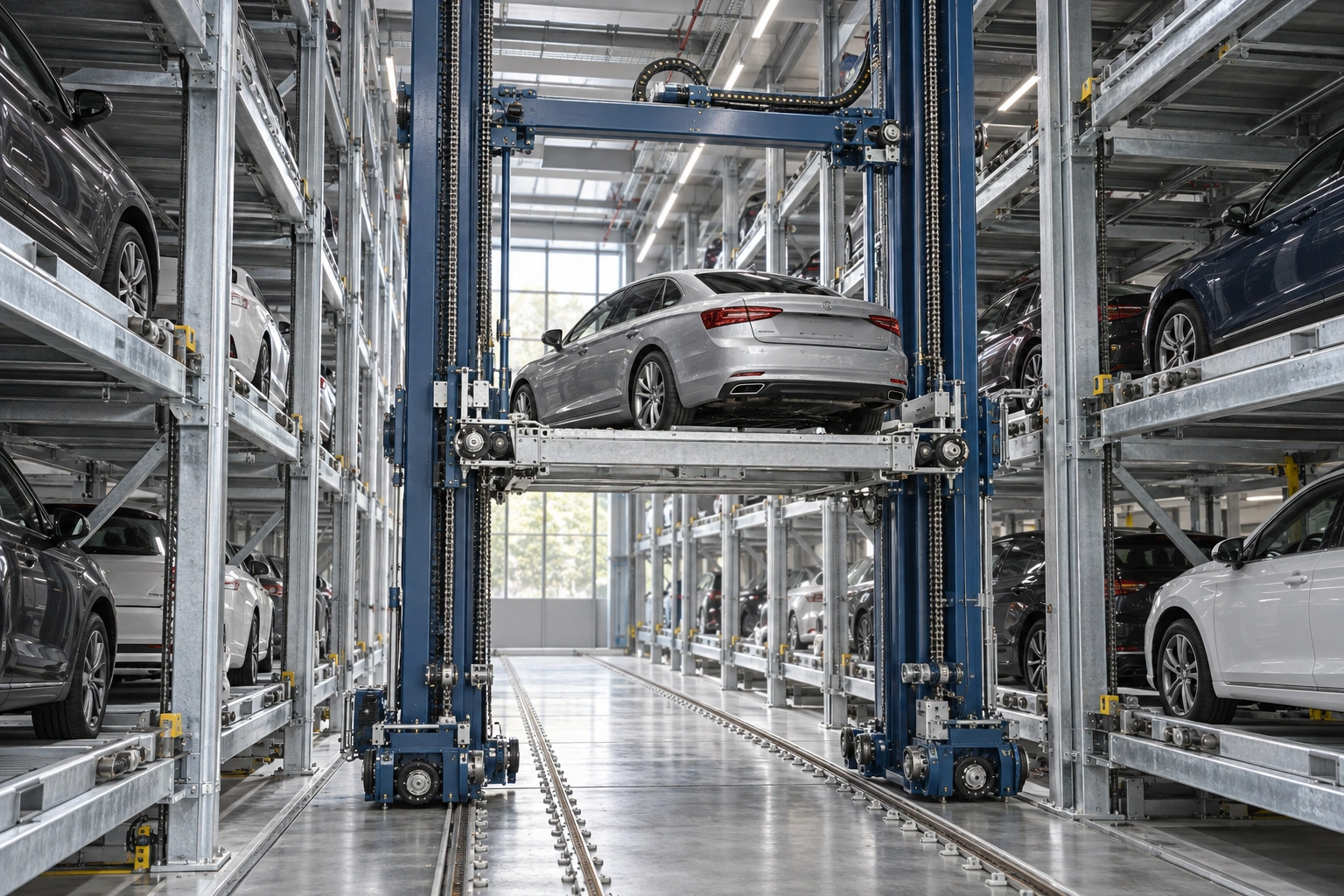
A guided lifting carriage moves cars vertically and along the aisle between storage racks. Drivers leave and collect their cars at the transfer bay.
- Capacity
- Designed per site
- Retrieval
- Automated return to transfer bay
Site suitability
Where this system fits.
Buildings with room for rows of parking across several levels, where drivers need to retrieve cars without asking others to move theirs out.
What to plan for
Allow for transfer bays, queuing and maintenance access. Check structural clearances, power, fire-safety requirements and recovery procedures alongside the parking layout.
Typical settings: Residential developments · Office buildings · Hotels · Mixed-use developments
Daily use
Parking and retrieval.
01
Park and exit
Park in the transfer bay and leave the vehicle area before automated movement begins.
02
Move into storage
The lifting carriage travels to the selected level and bay, then transfers the car into its storage position.
03
Request your car
The system returns the selected car to the collection bay. Other drivers do not need to move their vehicles out.
Specifications
The details that shape the layout.
The project specification sets capacity and vehicle limits. The handling arrangement, transfer equipment and peak demand determine retrieval performance.
Request a project specification- Storage layout
- Levels and rows designed for the site
- Vehicle limits
- Weight, length, width and height agreed in the specification
- Transfer bays
- Number and position assessed against traffic demand
- Retrieval time
- Assessed for the layout and peak demand
Common questions
Questions before you choose.
- How does shuttle parking differ from puzzle parking?
- A travelling lifting carriage positions the car beside its storage bay. Puzzle parking moves platforms within a grid to create a path for the selected car.
- When would I choose shuttle parking over a tower?
- A tower concentrates storage vertically around a lift. Shuttle parking also uses the length of each parking level. Compare both against your building shape, available height and busiest arrival and departure periods.
- How long does it take to retrieve a car?
- The car's position, lift and shuttle arrangement, transfer process and queued requests all affect waiting time. Request an assessment for the proposed layout during peak demand.
- Can it accommodate SUVs and electric cars?
- Check vehicle weight and dimensions against the agreed design limits. EV charging needs a separate coordinated design and must be specified if required.
- Does the car return facing the exit?
- That depends on the transfer-bay layout and whether the design includes a turning mechanism. Confirm the driving direction at the planning stage.
Check the fit for your project.
Share a site plan, required spaces and vehicle sizes. We can review the layout and define the next steps.