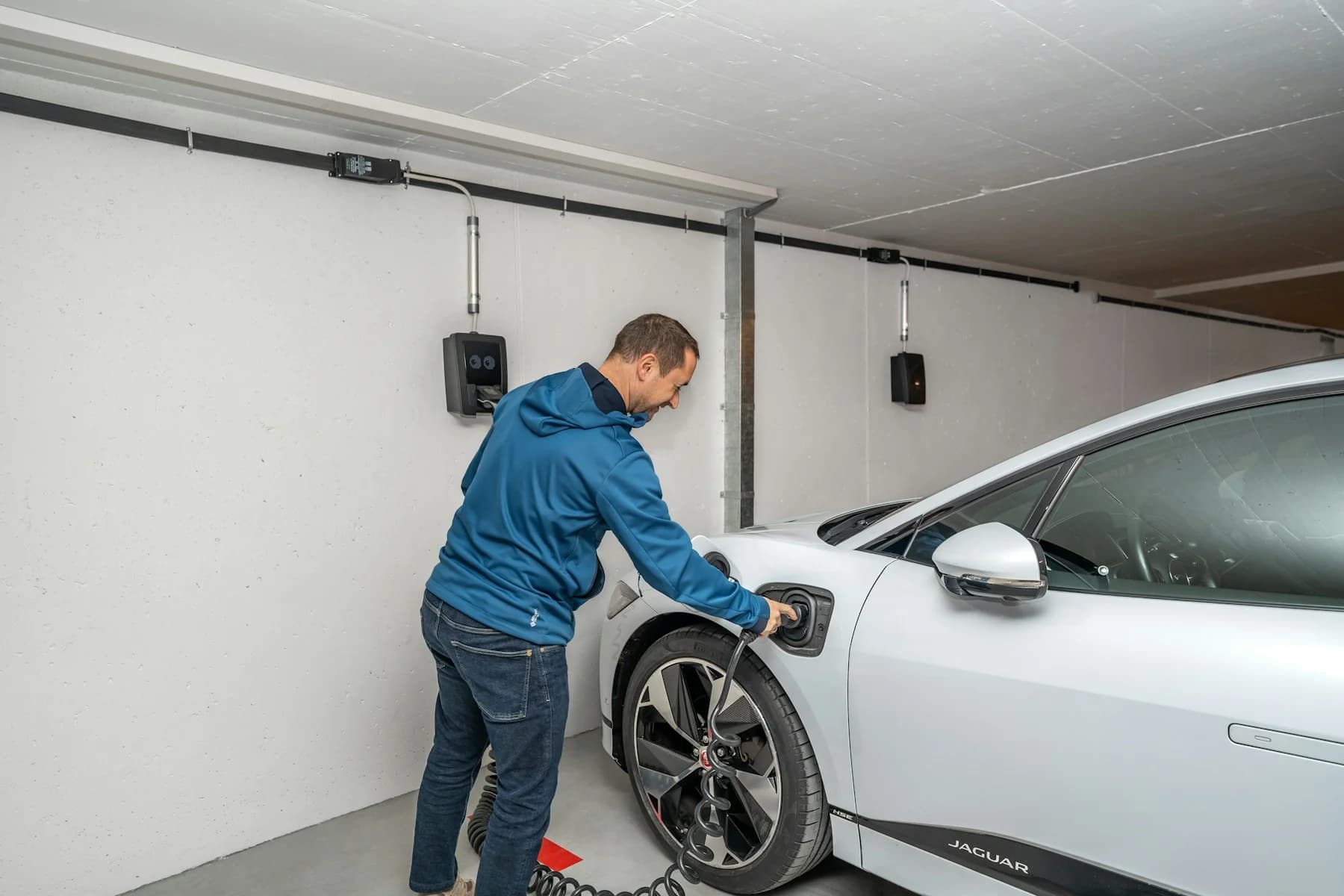
Two cars, one bay. Start with the daily routine.
A drawing can show two cars in one bay. It cannot tell you who leaves first on a Monday morning. That small detail can decide whether a stack system fits a household.
In brief
Choose the retrieval arrangement before choosing the equipment.
Start with who moves first
In a dependent stack, the lower car must move before the upper platform comes down. That can suit a household able to coordinate the two cars. It needs a different conversation when the spaces belong to unrelated users.
Ask who holds the keys, when each car normally leaves and where the lower car can move during retrieval. These are design inputs, not details to leave for the operator.
Capacity and convenience are separate decisions
An extra space adds storage capacity. It does not automatically make every car independently accessible.
Where cars need to be retrieved without other drivers moving theirs out, a puzzle arrangement may be more suitable. Platforms move within the system to bring the selected vehicle to the access level. The trade-off is a different layout, control sequence and space requirement.
Write the brief around the people
A useful brief describes the daily routine as well as the vehicle count. For a home, that may be two cars with different departure times. For a residential building, it may mean a mix of allocated spaces, visitors and attendant-managed areas.
Make those distinctions early. The best fit is the system whose capacity and retrieval arrangement both meet the brief.
About this article
Based on the retrieval arrangements described in Symtech’s stack and puzzle parking product records.